
OUR
SERVICES
Supporting families through evidence based-intervention therapies, so they can stay together — safely.
We provide tailored services for families, young people, parents, therapists, professionals, and commissioners
For families and young people

Functional Family Therapy
FIND OUT MORE ABOUT A SERVICE
For parents

Parental Psychology Services
For families and young people

Multi-Systemic Therapy
For commissioners

Commissioning and Governance
For professionals and local authorities

Programme Management
How does FFT work?
FFT supports families with a child or young person aged 10-17 who is showing significant anti-social or acting out behaviours such as missing from school, substance abuse, risk-taking or offending behaviours. Our FFT CW team works with families where neglect is more prevalent. We also work with young people returning home after short periods in care, using FFT to support safe and successful reunification.
Families are first offered an explanation of the model so that they can make an informed decision to participate. Engagement and building hope are prioritised, with therapists drawing on family strengths to develop trust and motivation for change.
All family members attend sessions together. This helps the therapist maintain a balanced alliance with everyone in the family. This is an important feature of the FFT model.
Behaviours are understood within the context of family relationships, with attention given to “stuck” interactions and repeating patterns that keep problems going.
FFT is a well-researched, phased model with specific techniques for each stage. By reframing behaviours as attempts to solve problems, rather than blaming, FFT reduces guilt and conflict. As families understand each other differently, they begin to communicate in new, more positive ways.


Functional Family Therapy
Phased Model Approach: The four stages of FFT

1 Engagement: We engage each family member in the therapeutic work and encourage the potential for change through relating differently with each other.
2 Motivation: We begin by understanding the family’s difficulties, styles of communication, behavioural patterns, and their functions. Our goal is to reduce blame and negativity, increase hopefulness and build motivation for change.
3 Behaviour Change: Therapists deliver tailored interventions for the family, addressing the risks, concerns and behaviour of parents and children. The focus is on skill-building, problem-solving and family connectivity rather than delving into the past.
4 Generalisation: Therapists help and coach the family in exploring how their new-found skills and strengths can be applied both in and outside the home. We help the family anticipate potential setbacks and identify a support network to help maintain and enhance the new skills and changes, to help prevent relapse.
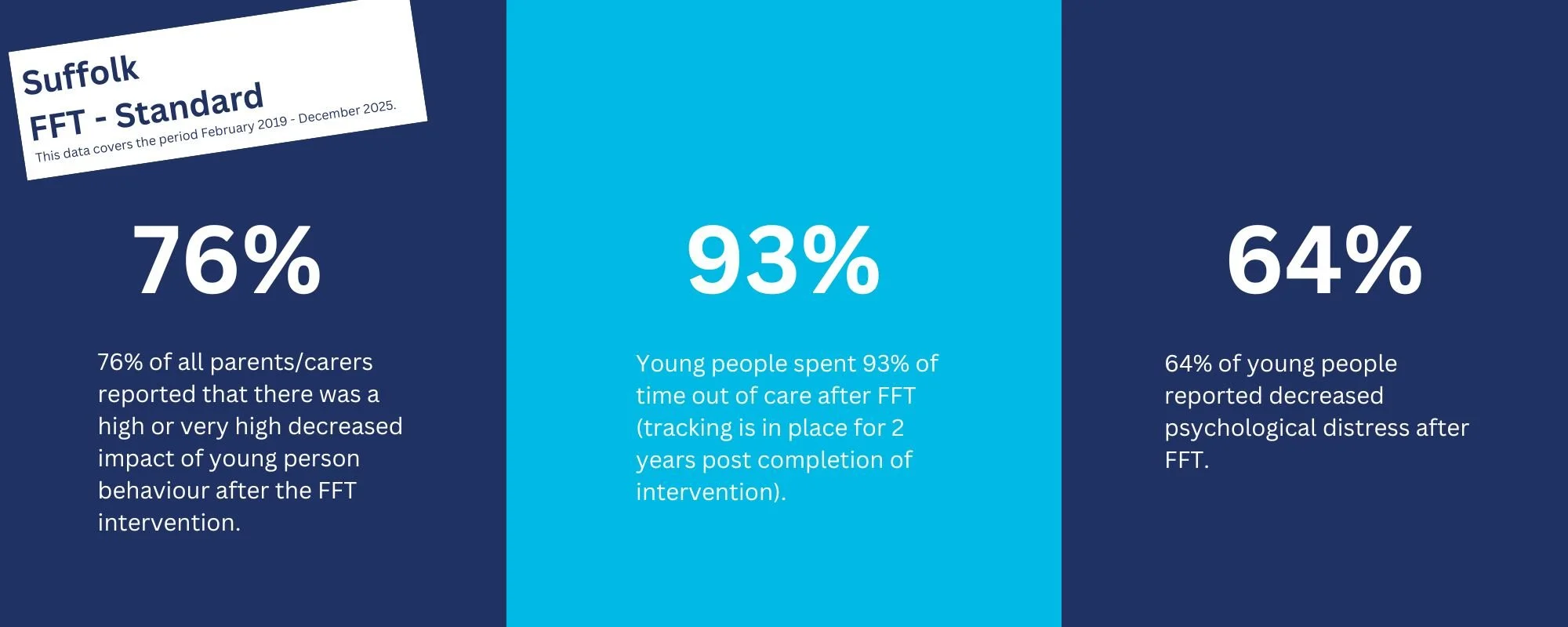
Referrers and families have access to 3 to 4 follow-up sessions, known as boosters, up to 6 months after finishing the therapy. This allows the family to refresh the skills learned in new situations and upcoming crises.
Quality Assurance
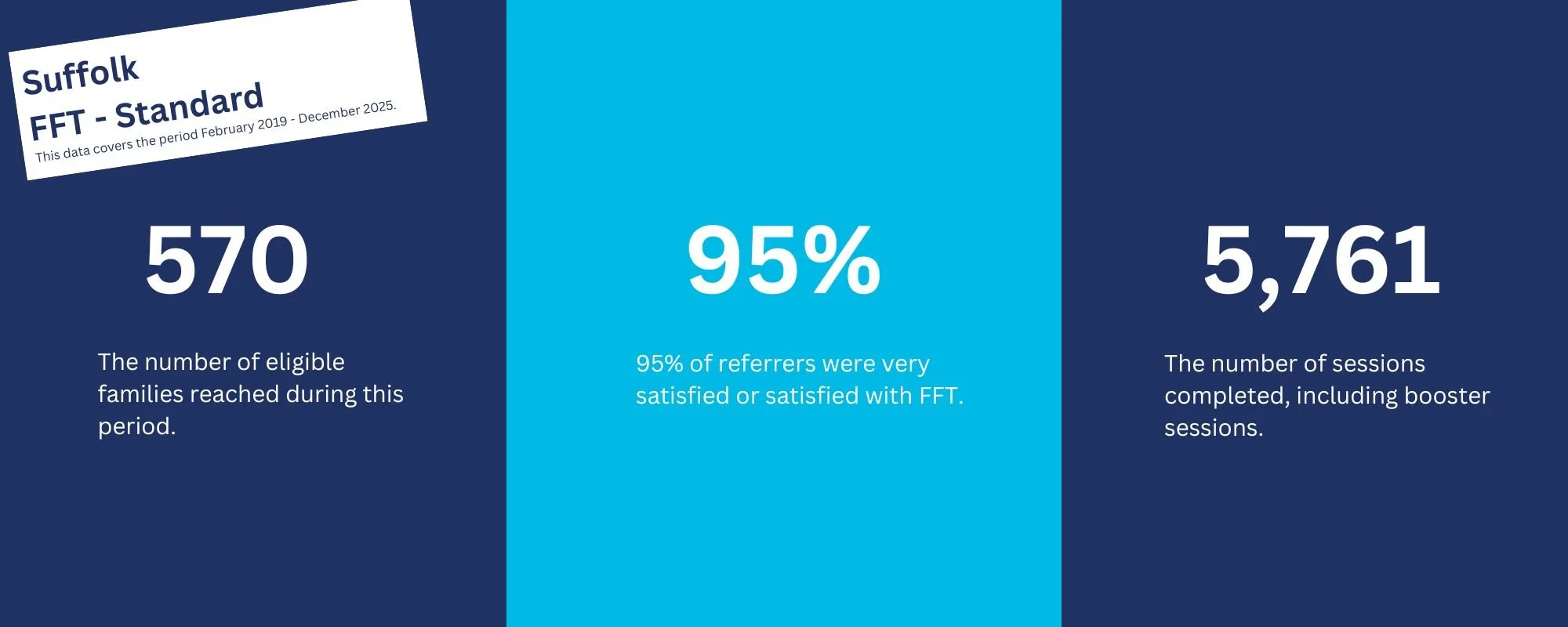
Maintaining high adherence to the FFT model is essential for achieving strong outcomes. Implementation is supported by a structured quality-assurance process that includes:
Planning for Successful Intervention
Effective planning is central to FFT success. Therapists carefully prepare each session, selecting skills and techniques needed to support change. Families are often given tasks between sessions, helping them embed new skills and communicate patterns. FFT always uses a whole family approach, ensuring every family member is involved in the work and benefits from the changes being made.
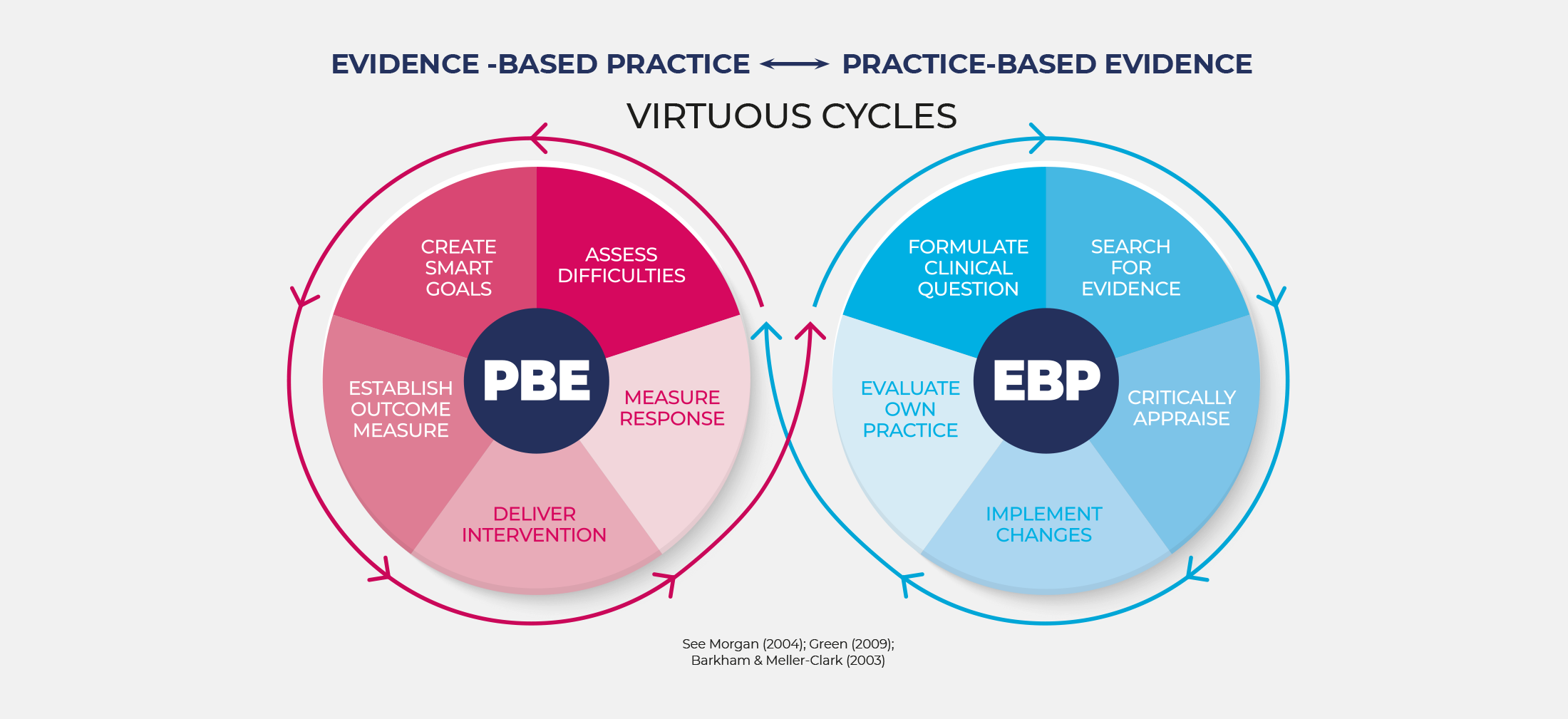
Weekly Group supervision led by a qualified FFT Supervisor.
Weekly risk and safeguarding meetings to create safety plans and minimise risks.
Comprehensive data collection, ensuring all pathway elements are recorded and used for feedback and continuous improvement.

TYPES OF FFT
Functional Family Therapy (FFT) - Child Welfare
(FFT-CW) is a clinical adaptation of FFT designed for cases where neglect by parents or caregivers is the primary concern for referral. This model places greater emphasis on parental behaviours linked to safeguarding risks, such as neglect, emotional or physical abuse, and difficulties arising from mental health issues, past domestic abuse, trauma, or emotional dysregulation.
FFT-CW follows the same principles as FFT Standard but can be delivered to families from birth to 17 years. The model was first described in a detailed clinical manual (Alexander et al., 2011) and was implemented across all five boroughs of New York City using a structured protocol (Rowlands & Davidson, 2011).
FPM was the second organisation to bring FFT-CW to the UK and has delivered the model in Norfolk since 2019. FFT-CW has shown strong outcomes for child welfare and has integrated well into the UK social care system.
The intervention typically lasts 5-7 months, with families to be able to request up to four booster sessions over the following six months to support the continued application of skills and address new challenges.
Functional Family Therapy (FFT) - Extra Familial Harm
FFT-Extra Familial Harm is a clinical adaptation of FFT designed for children at risk of child criminal exploitation, gang involvement or other contextual risks outside of their family home. FFT-EFH strengthens the family as a protective and stabilising unit. By improving communication, relationships, and problem-solving, the intervention helps families buffer external risks both immediately and in the long term, with benefits that continue beyond the end of therapy.
Family Psychology Mutual CIC has been awarded a Youth Endowment Fund grant for an efficacy Randomised Controlled Trial (RCT) of FFT-EFH. This follows a successful pilot RCT in Redbridge, which demonstrated that the model can be adapted effectively for the UK context and achieve positive outcomes for young people aged 10 to 17 at risk of gang involvement and child criminal exploitation.
The project is delivered in collaboration with the London Boroughs of Redbridge, Tower Hamlets, and Haringey. Three FFT teams, each comprising one Supervisor, two FFT workers and a Business Support Officer, are embedded within their boroughs to enable close interagency collaboration, joint working, and shared data systems.


Functional Family Therapy (FFT) - Standard
FFT is typically a 5 month, phased intervention that builds skills and strengthens relationships through weekly sessions, usually delivered at home. It is designed for referrals from early help, youth justice and social care services.


MULTI-SYSTEMIC THERAPY (MST)
MST is an intensive, evidence-based programme for young people aged 11-17 who are at risk of entering care or custody due to serious offending or challenging behaviour. The aim is simple: keep young people safely at home, in school, and out of trouble by working closely with families, schools and the wider community.

FPM and its founding team were among the earliest providers of MST in the UK. They established the first team in Cambridgeshire in 2001 and went on to deliver and manage programmes across Cambridgeshire, Northamptonshire, Bedfordshire, Peterborough, Essex and London.
Over time, the team introduced new MST adaptations, including programmes for substance abuse, problem sexual behaviour, child abuse and neglect, as well as a pilot supporting young people returning from residential care to foster care.
With extensive experience in both delivery and programme management, FPM hopes to return to providing MST again in the future.
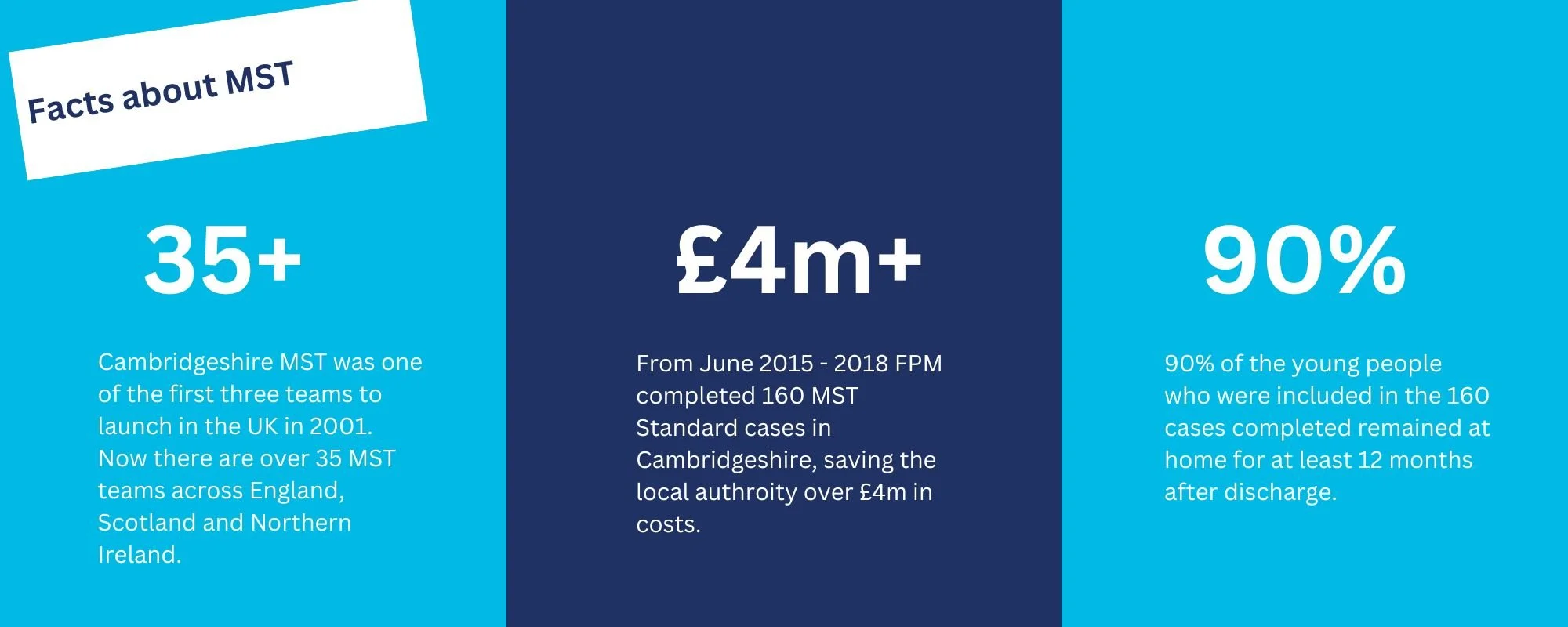
Our experience of programme management ensures that evidenced-based interventions are delivered in the best conditions for success. We focus on referral flow, clinical management and system adaptation, creating a strong foundation for positive outcomes.
PROGRAMME MANAGEMENT
Working with local authorities
FPM has extensive experience in the implementation and mobilisation of clinical programmes, supported by consultant clinical psychologists and family therapists. We assist Local Authorities to launch, deliver and oversee evidence-based services, drawing on long-standing partnerships with MST Services and FFT LLC.
With a history of delivering multiple interventions, FPM uses implementation science and practical experience to guide programmes from initial setup through to long-term sustainment. Our offer includes advisory services and strategic support. We have provided consultancy for Social Finance, Children in Need and for the UK MST Network Partnership.

We have developed a pilot service that links adult mental health interventions directly to the child protection system. The aim is to enhance parenting capacity, reduce risk, and ensure children can remain safely in the home.

PARENTAL PSYCHOLOGY SERVICE
Helping parents for a better future
Building on learning from the MST-CAN pilot, we know that supporting parents’ mental health with evidence-based therapeutic approaches can create long-term, sustainable change.
In 2018 a Big Lottery grant to develop a costed business plan for the provision of a parental psychology service delivered in partnership with adult mental health services. The model is grounded in systemic therapy and delivered within a children’s social care context.
What the Parental Psychology Service Will Provide


The proposed team will be led by an experienced clinical psychologist with a strong background in adult mental health and systemic practice. Therapists will offer a range of evidenced-based psychological interventions such as:
· Cognitive behavioural therapy for anxiety and depression,
· Trauma-focused therapies for PTSD including EMDR,
· Dialectic behaviour therapy (DBT) for personality problems
· Relationship-focused interventions for couples
Family sessions will be held at the beginning, during and end of intervention to understand how mental health symptoms impact parenting.
The service would provide12-24 sessions of weekly therapy, taking clinical responsibility for parents’ psychological treatment while the case is open to children’s social care. Therapists will attend relevant safeguarding meetings regarding the children (CP, CIN and unit meetings) and liaise closely with the GP and other professionals.

Benefits of the Service
This service offers a unique and valuable addition to children’s social care by providing direct access to adult-focused therapeutic support that is tightly connected to safeguarding. By improving parents’ mental health, we strengthen their capacity to meet their children’s needs and reduce risks within the family home.
Next Steps
FPM is committed to developing a robust service specification and is now seeking to pilot and evaluate this model in partnership with a local authority.
We work closely with commissioners in the areas where our services operate, aiming to build long-term, trusting relationships. By developing a shared understanding of local needs and pressures, we can identify opportunities for positive engagement and effective service design.
COMMISSINING AND GOVERNANCE
Our approach includes ongoing governance and performance management, ensuring high utilisation, addressing barriers quickly, and using data analytics to drive continuous improvement. This creates dynamic services that achieve the outcomes we all want to see. We have experience working under both fee-for-service and outcome-based contract models.
Because evidence-based interventions require systems to be aligned around them, we collaborate with commissioners to help them make the best use of the services we deliver. This joint work is often detailed and time-intensive, but critical in achieving high-quality results.
We value the strong relationships we have built locally and welcome conversations with commissioners at any stage – from early exploratory discussions through to tendering, mobilisation and service start-up. We understand the internal processes commissioners must navigate and appreciate the time required to secure and justify their decisions.